
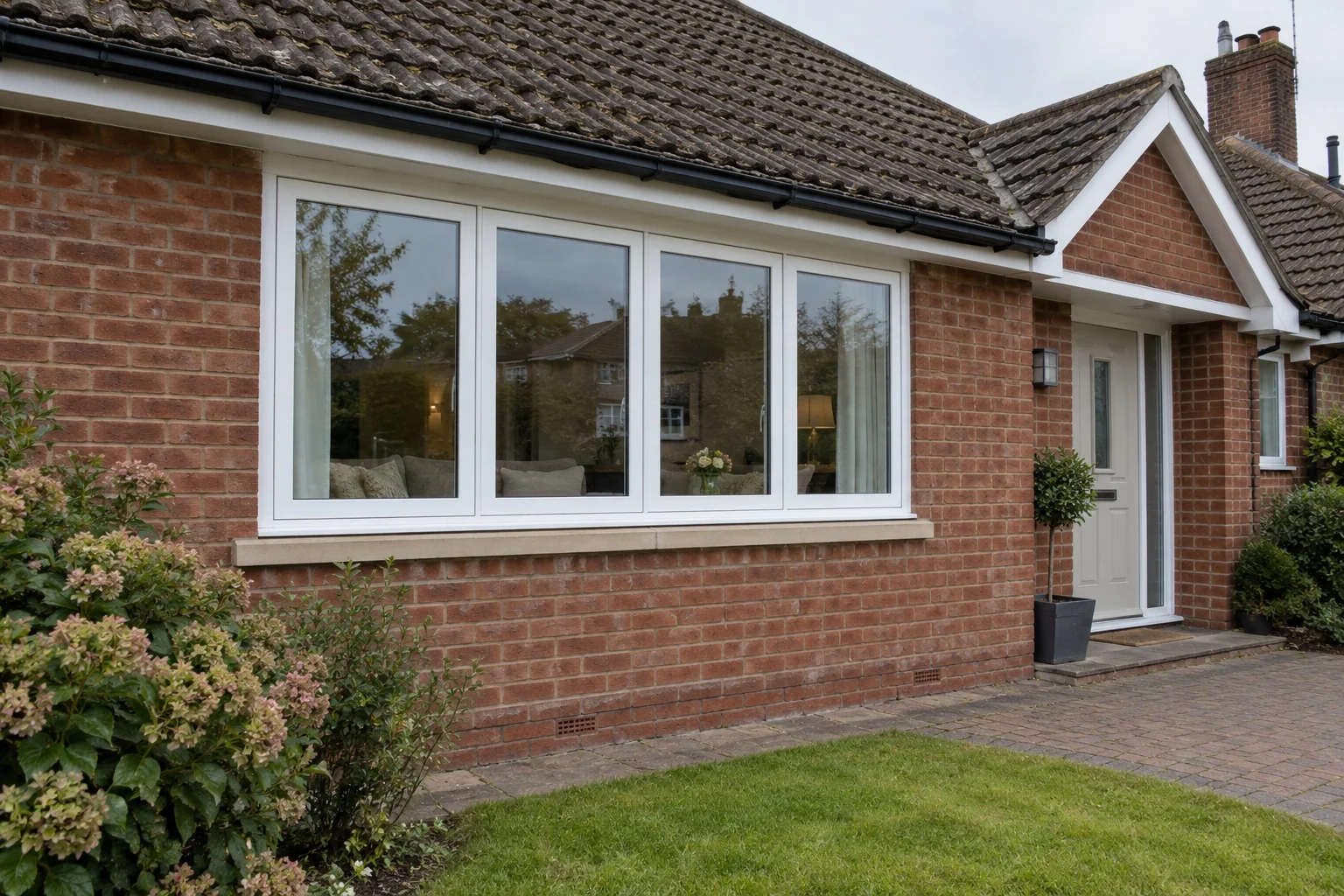
Flush uPVC
casement windows.
Traditional proportions with a refined, flat exterior finish. Discover what makes flush uPVC casements different, how they perform, and what matters when replacing your windows.
What makes a window flush?
A flush uPVC casement has an opening section, called the sash, that closes level with the surrounding outer frame. The result is a flatter appearance from outside compared with a standard overlapping casement.
The style takes visual cues from traditional timber casements, but uses low-maintenance uPVC framing. The term flush sash describes how it sits within the frame; it does not mean the window slides vertically.
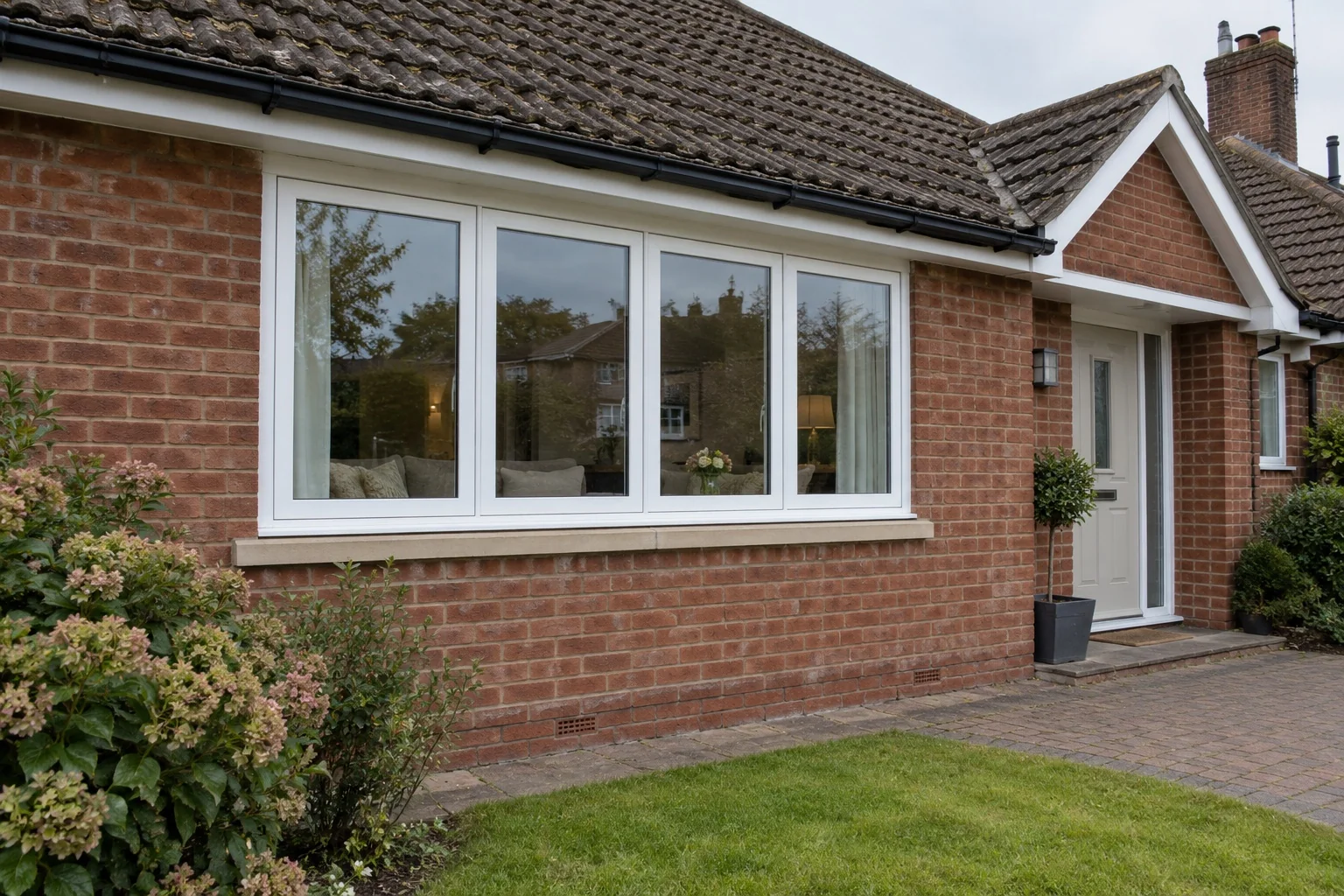
Flush vs standard casement.
Both can be good windows. The most obvious difference is the way the opening sash meets the outer frame when closed.
Flush uPVC casement
A neat, flat outside appearance, often chosen for timber-inspired renovations or a minimalist look. Weather sealing, glazing and hardware are built into the specific flush system.
Standard uPVC casement
A familiar, practical replacement-window style. It can be an excellent choice too. Compare actual specifications and frame detailing rather than assuming one is automatically warmer or more secure.
Good looks, with everyday practicality.
Six useful reasons to consider flush casements. Individual product capabilities depend on the manufacturer and final specification.
Neater frame lines
The sash closes into the frame for a flatter exterior profile.
Timber-inspired styling
A considered option for traditional properties without the routine timber painting.
Low maintenance
uPVC frames typically need cleaning and ordinary hardware care, not frequent repainting.
Thermal potential
Modern sealed systems can help reduce heat loss when properly specified and installed.
Practical openings
Fixed, side-hung and top-hung arrangements may be possible for different rooms.
Design flexibility
Glazing-bar layouts and matching finishing details can be explored, subject to the system.
The right window is about more than the frame.
When comparing quotations, ask about the complete window: frames, sealed glazing units, hinges, locks, seals and the installation detail. A picture alone cannot tell you its U-value, security rating or ventilation performance.
A lower U-value indicates less heat passing through the window. Compare like-for-like whole units.
Window Energy Ratings also consider solar gain and air leakage, not just heat transfer.
Ask for documented locking, safety-glazing and emergency-escape details where relevant.
Many replacements require background ventilation. Review requirements before ordering.
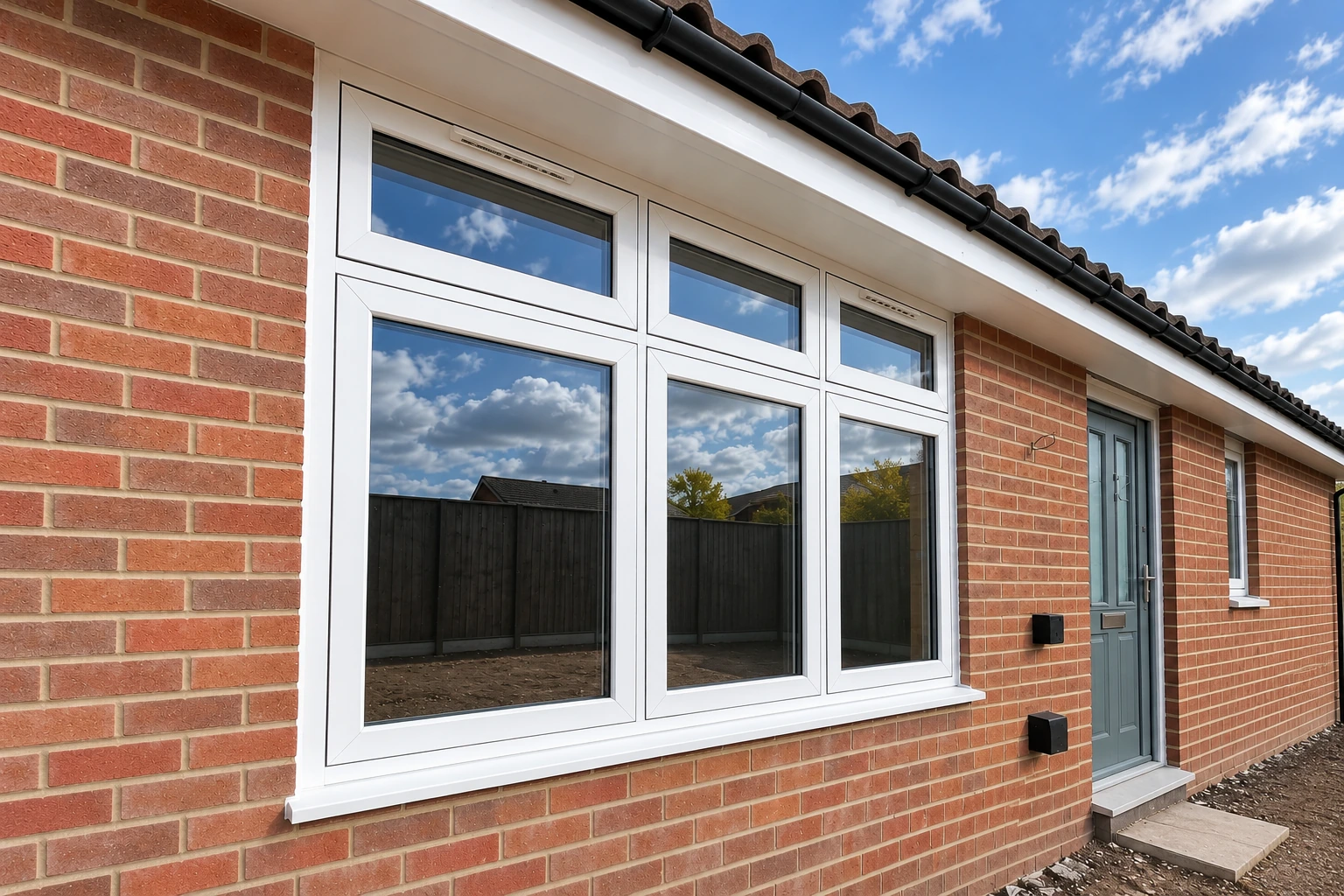
Explore flush & casement designs.
Ten photographs to help you compare proportions, glazed sections and property styles. Tap any image to enlarge it.
Design references: These ten supplied images are not all verified flush uPVC products. Some filenames identify aluminium or standard casements. The images illustrate possible appearances, not confirmed frame materials, manufacturer specifications or completed DF jobs. We confirm the actual flush uPVC system before quotation.
The fitting details matter.
The survey should establish what needs to be replaced and what must remain compliant, not simply match the old window measurements.
Survey & sizing
Opening dimensions, sills, reveals, access and existing frame conditions.
Glazing specification
Whole-window thermal performance, safety glass and appropriate acoustic options.
Ventilation
Check background ventilation, trickle vents and any justified alternatives.
Opening & escape
Agree opening sizes, operation and emergency egress where applicable.
Period properties
Check any listed-building or conservation restrictions before ordering.
Finishing & handover
Perimeter sealing, trims, making good and operation checks.
Flush uPVC window FAQs.
Straightforward answers to the questions homeowners should ask before replacing their windows.
What is a flush uPVC casement window?
It is a hinged casement window in which the opening sash sits level with the outer frame when closed. This produces a flatter outside face than a conventional overlapping casement.
How is a flush casement different from a standard casement?
The main visual difference is the outer sash detail. Standard casements generally overlap the frame; flush casements sit level with it. Thermal, acoustic and security performance must still be compared for the exact products.
Do flush windows slide up and down?
No. Despite the word “sash”, flush casement windows are hinged and typically open outwards. Vertical sliding sash windows are a separate product.
Are flush uPVC windows suitable for older homes?
Often, especially where a restrained, timber-inspired appearance is wanted. Listed buildings, conservation restrictions and any other planning requirements must be checked for the specific property.
Are flush casement windows energy efficient?
They can be when the complete window system is appropriately specified. Compare verified whole-window U-values and energy ratings, not the glazing alone. Performance varies by manufacturer and configuration.
Can flush uPVC windows include Georgian bars?
Many systems offer decorative glazing bar arrangements, but bar pattern, location and availability depend on the window specification and manufacturer.
Are flush uPVC windows secure?
Look for documented whole-window security performance, appropriate locks, hinges and glazing. Do not assume a particular security certification without checking the exact model and configuration.
Will my new windows need trickle vents?
Background ventilation is required for many replacement window projects in England. The correct solution depends on the property and existing ventilation; alternatives or exemptions must be properly established at survey stage.
Can you replace standard casements with flush uPVC windows?
Often yes, but the opening dimensions, frame sightlines, sills, ventilation, accessibility and any surrounding making-good need checking before a replacement specification is confirmed.
Can DF Installations fit flush windows supplied by another company?
Suitable installation-only enquiries are welcome. Send the supplier’s technical documents, dimensions, photographs and postcode before ordering so we can assess compatibility and agree responsibilities.
Considering a cleaner window finish?
Tell us your postcode, what you'd like to replace and whether you need supply and fit or installation only. We’ll discuss your options and next steps.
Request a free quote ↗