
Bay & bow windows.
Add natural light, character and a wider outlook to your home. Explore bay and bow window designs, frame materials and installation options for properties across Hertfordshire, North London and Bedfordshire.
What are bay and bow windows?
Bay and bow windows extend outwards from the main wall of a property. They can bring more daylight into a room, open up the view and create a distinctive exterior feature.
Bay windows typically use angled sections; bow windows arrange multiple sections into a softer curve. Both can suit a range of homes, from traditional brick properties to contemporary renovations.
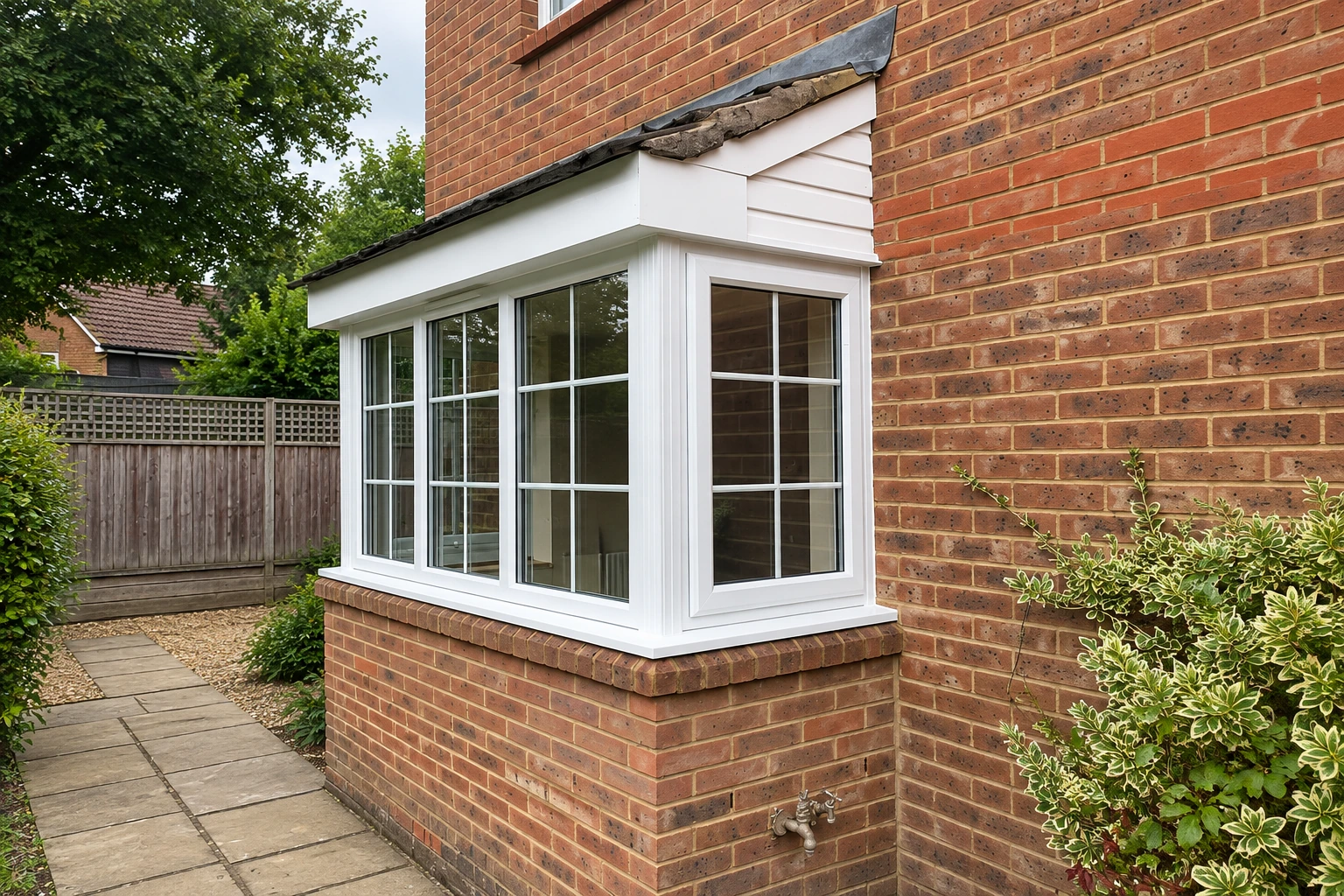
Bay vs bow windows
Both add character. The difference is in the geometry, number of sections and overall appearance.
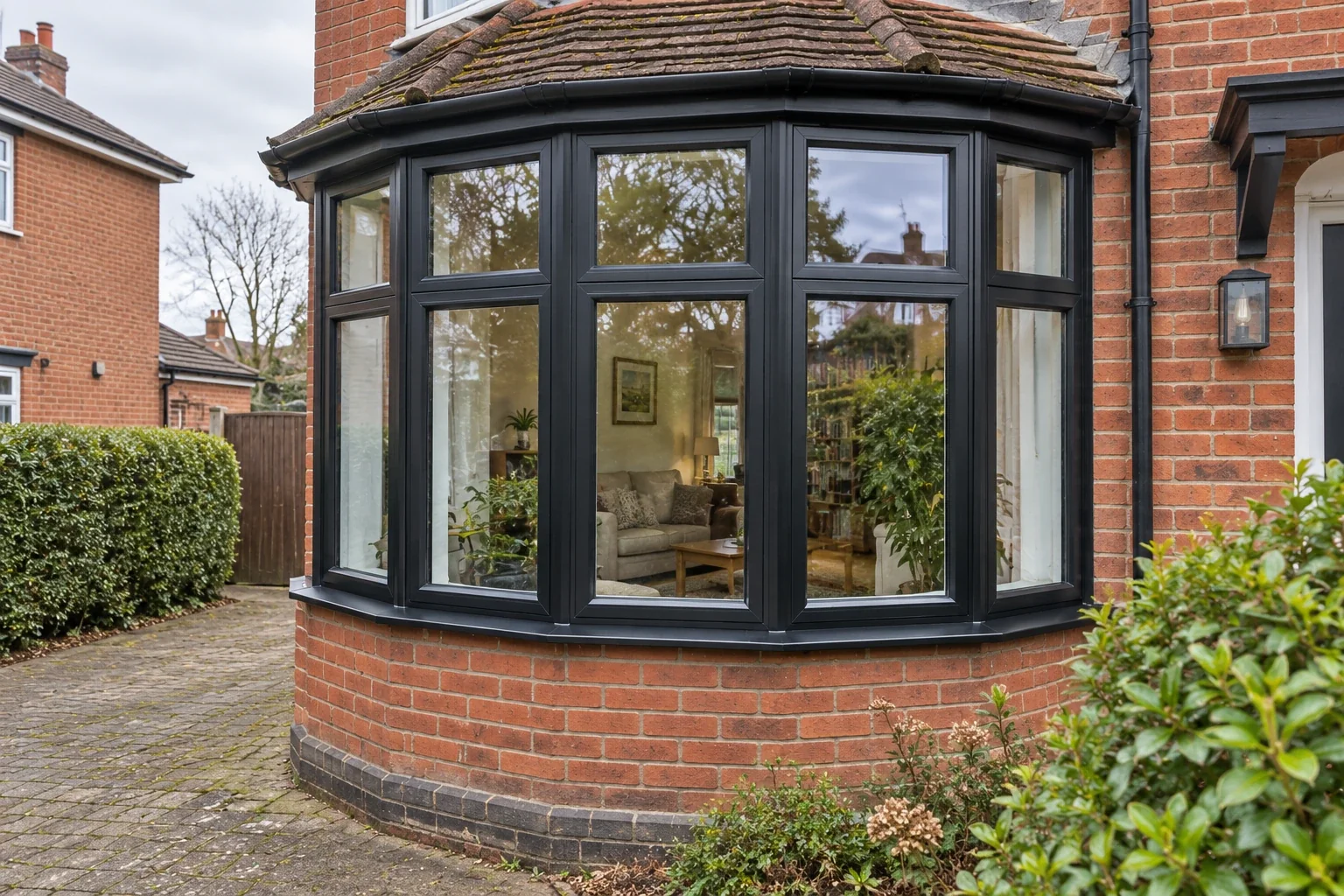
Bay windows
Often three or more panes arranged at distinct angles. They create a faceted projection and a defined architectural shape.
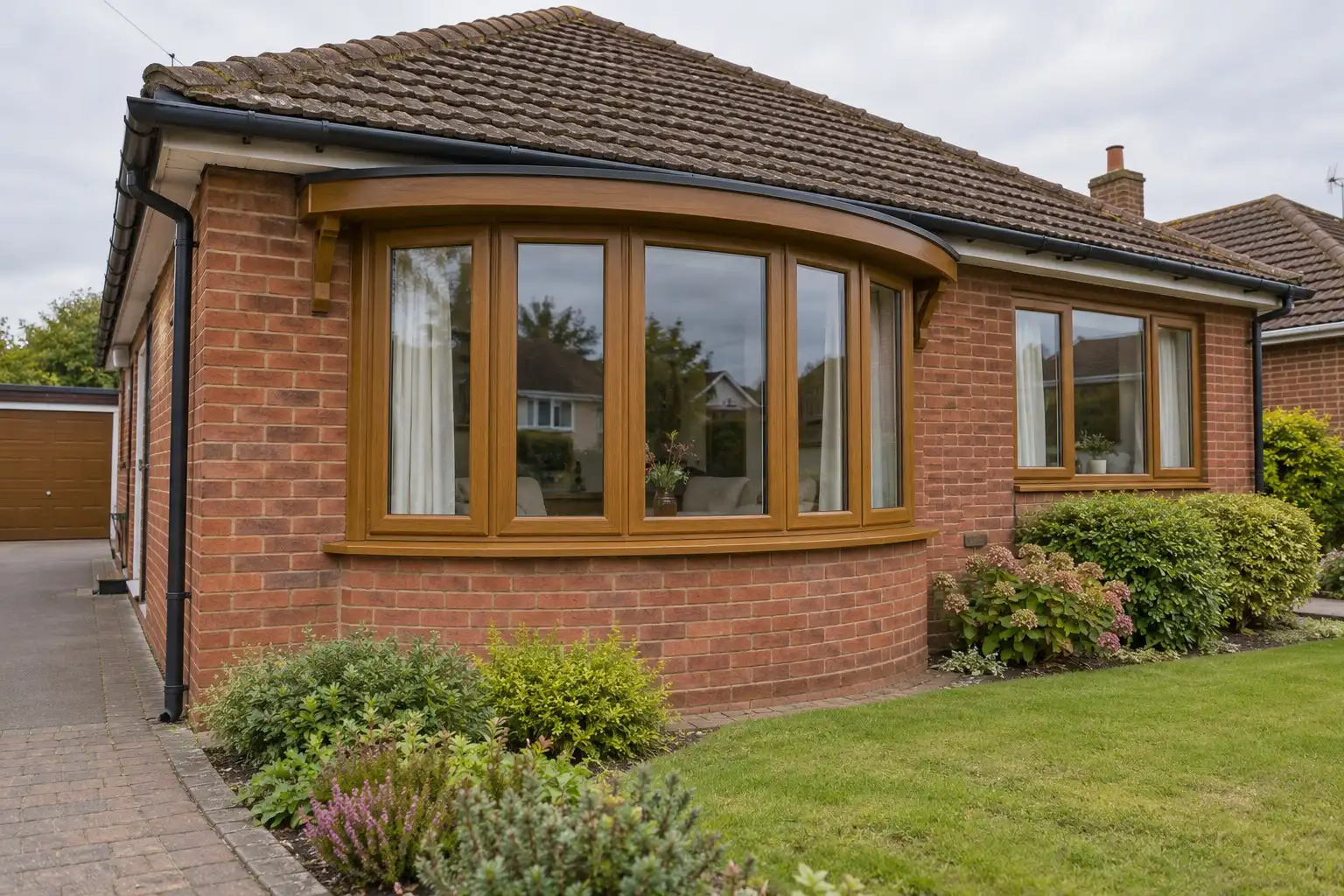
Bow windows
Usually more panels arranged in a gentle curve. This gives a softer, rounded profile and a broad outlook.
Materials, colours & styles
From crisp white to characterful woodgrain, the frame finish can make a real difference to the overall appearance of your home. Exact configurations and colours depend on the chosen system.
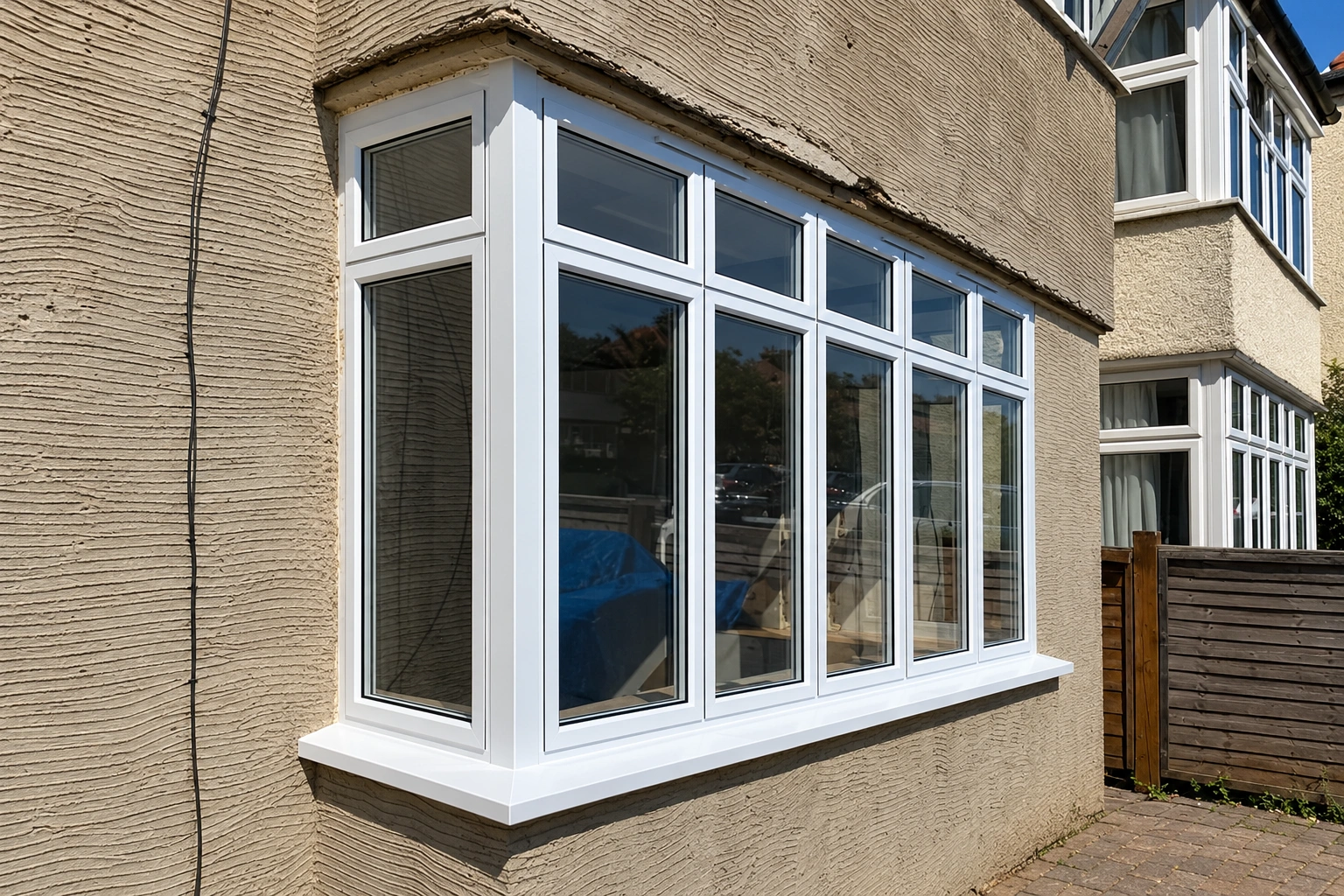
Low-maintenance frames in familiar profiles, with a choice of colours and glazing configurations.
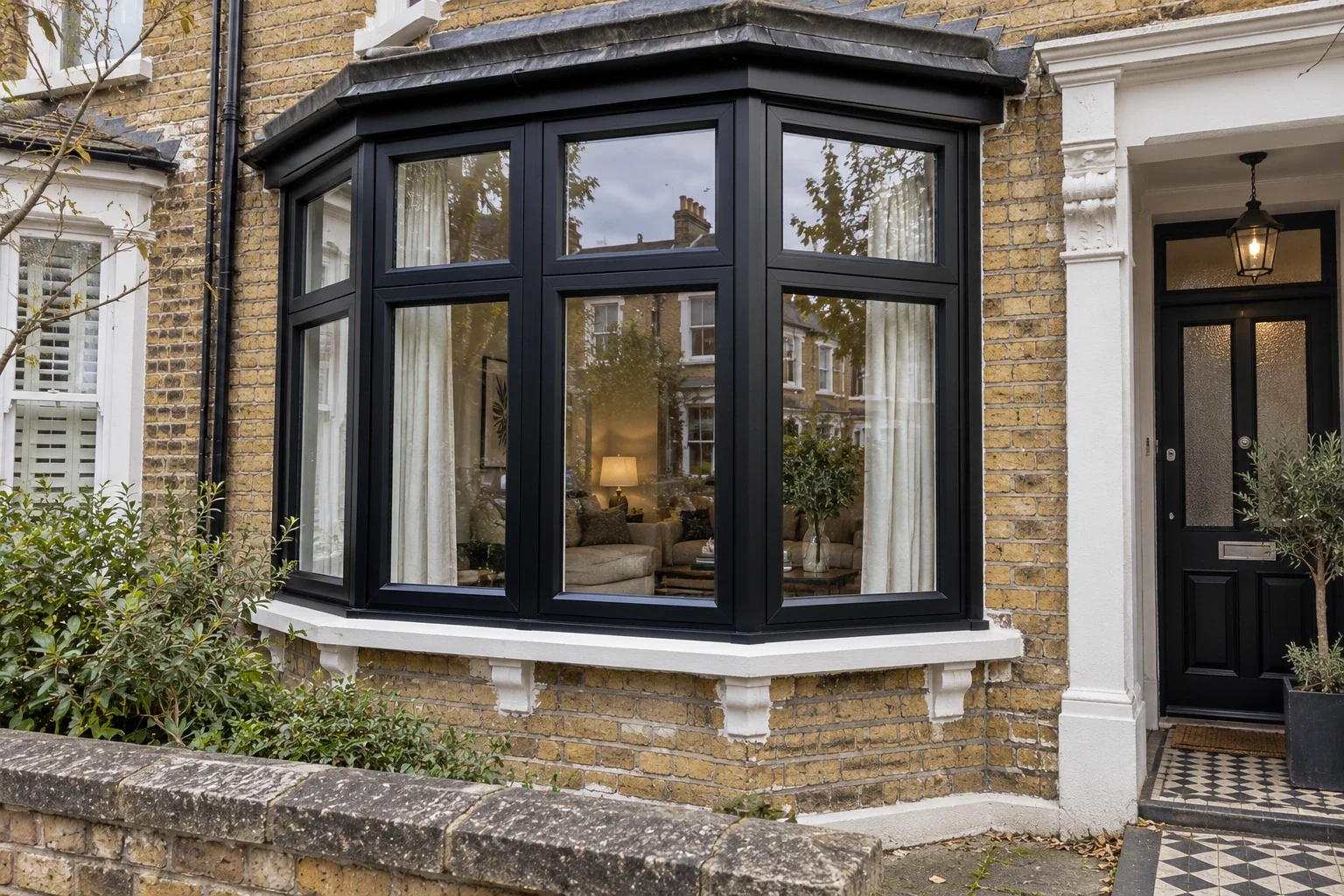
A contemporary option with potential for slim sightlines, where the system and opening permit.
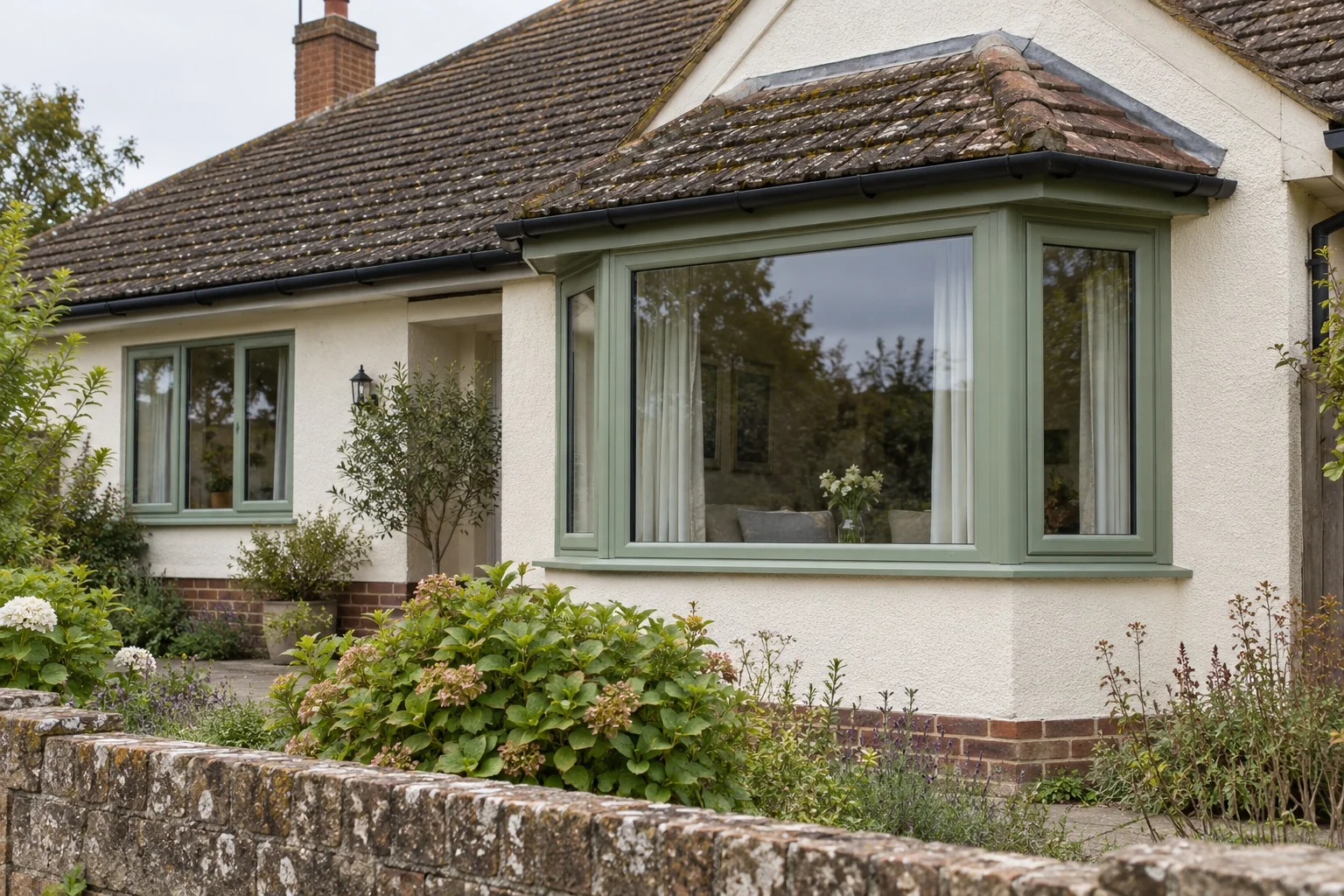
Explore anthracite, black, white, cream, Chartwell green and golden oak style finishes.
More than just a view.
Bay and bow windows can transform both the room and the appearance of your property. The actual benefits depend on the size and design chosen.
More natural light
Glazing on multiple sides can help brighten a room throughout the day.
Useful internal space
Some designs create a deeper window area for a seat, display or extra breathing room.
Wider outlook
See more of the garden, street or surroundings from several angles.
Kerb appeal
A distinctive shape can complement both traditional and modern façades.
Ventilation choices
Combine fixed and opening sections, with background ventilation considered where required.
Thermal comfort
Appropriately specified glazing, frames and fitting can improve performance over ageing windows.
Explore bay & bow designs.
Browse the eleven image references and enlarge any window to examine its shape, finish and proportions.
The details matter.
Bay and bow windows involve more than choosing a frame colour. We discuss the existing opening, structure, access and finishing before agreeing the installation scope.
Review the load paths and any support needed for the bay projection.
Consider existing roof coverings, flashings, seals and rainwater details.
Select suitable casement, fixed and other permitted opening styles.
Discuss safety, energy and acoustic performance relevant to the project.
Consider suitable glazing, locks, handles and accessible openings.
Review purge and background ventilation requirements, including trickle vents.
Check boards, trims, reveals and the finish around the new frame.
Confirm measurements and any applicable permissions or building rules.
Bay & bow window FAQs.
Ten practical answers about styles, materials, replacement work and fitting.
1. What is the difference between a bay window and a bow window?
A bay window projects from the wall with distinct angled sides, often in three sections. A bow window uses more sections arranged in a gentler curve. The best option depends on your property, available space and the appearance you want.
2. Can you replace an existing bay window without changing the shape?
Often, yes. The existing shape can usually guide the replacement design, but we need to check the frame sizes, support, roof and surrounding structure before confirming a suitable solution.
3. Can bay and bow windows be made from uPVC or aluminium?
Both are potential options, depending on the window system, size and structural requirements. uPVC is popular for its low-maintenance finish, while aluminium can offer slimmer sightlines. We confirm suitable systems before quoting.
4. Are coloured or woodgrain finishes available?
Depending on the manufacturer and product range, choices may include white, anthracite grey, black, Chartwell green, cream and woodgrain finishes such as golden oak. Availability varies by system.
5. Can I have opening windows and trickle vents?
Yes, many designs combine fixed and opening panes, subject to the system. Ventilation requirements should be considered as part of the replacement design, including whether background ventilators are required.
6. Are new bay and bow windows energy efficient?
Modern systems can improve thermal comfort when the complete window specification, glazing, seals and installation are suitable. We recommend comparing verified whole-window performance rather than relying on glass specifications alone.
7. Will a replacement bay need structural support?
Some bays need load-bearing support, and roof or brickwork details may also require attention. Structural requirements vary, so we check the existing arrangement and identify when a specialist assessment is needed.
8. How long does bay or bow window installation take?
Time depends on size, access, whether the existing bay is retained and whether structural or finishing work is required. We discuss the expected programme after reviewing the property and installation scope.
9. Do bay or bow windows suit older or period homes?
They can, and options such as Georgian-style bars may help retain character. For listed buildings or homes in conservation areas, check any permissions and restrictions before committing to the design.
10. Can DF Installations fit a bay or bow window I have already purchased?
We consider installation-only enquiries for suitable products. Send the manufacturer details, dimensions, site photographs and your postcode so we can check the fitting requirements and confirm responsibilities.
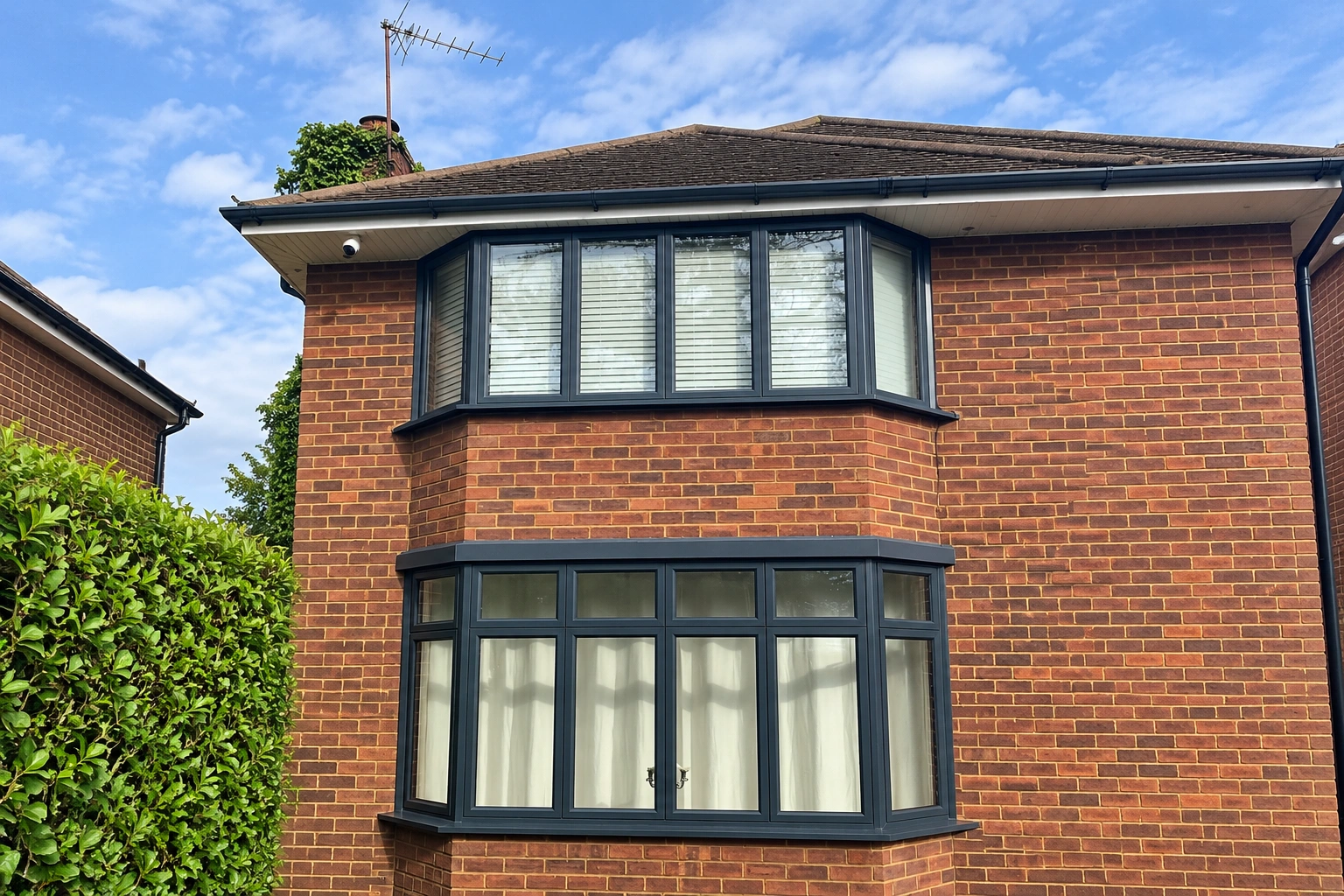
Ready to give your home a new perspective?
Planning a new bay or bow window in Hatfield, Hertfordshire, North London or Bedfordshire? Send us your postcode, photos and an outline of the work, and we’ll discuss the next step.